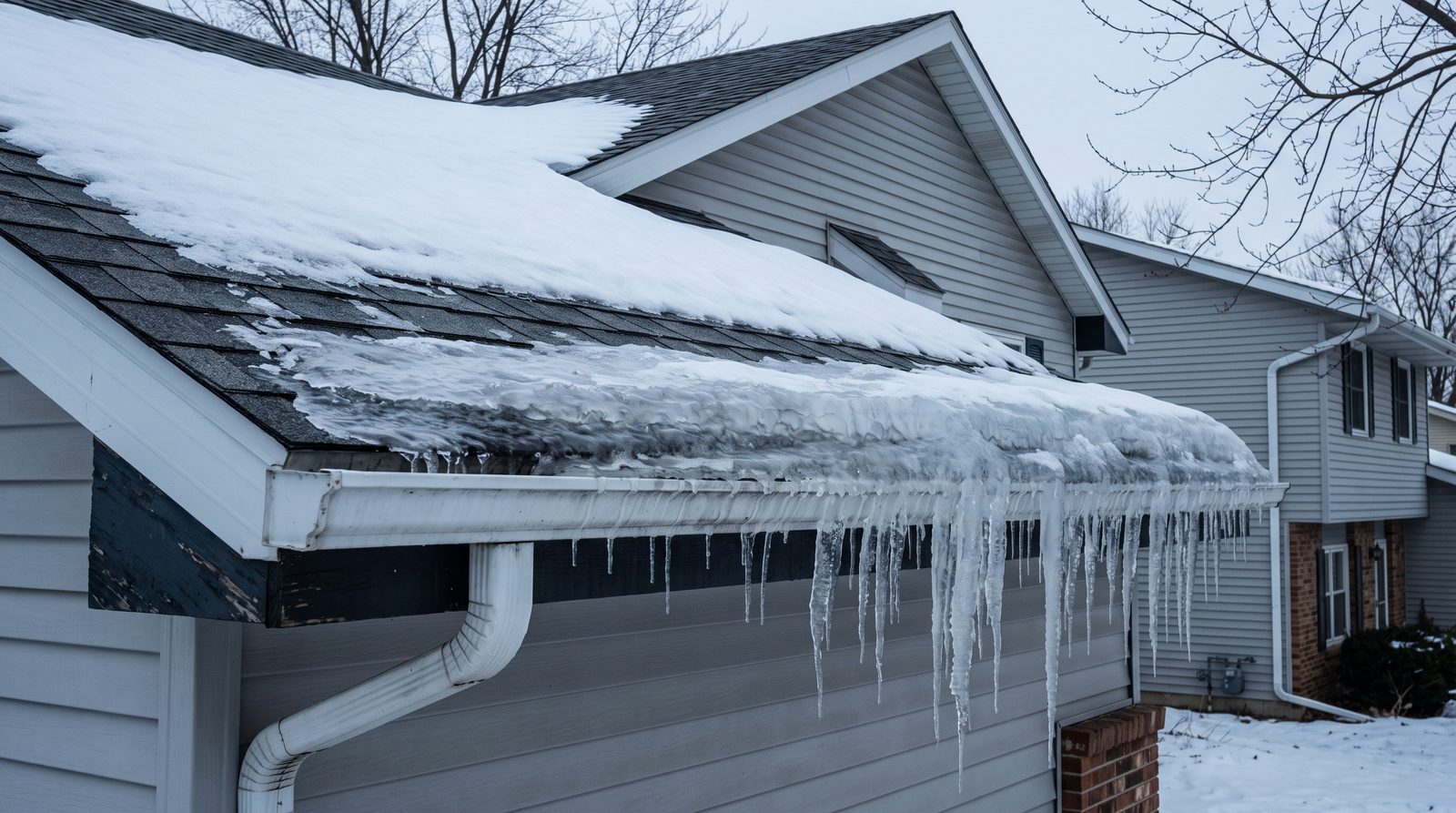
Those icicles hanging off the edge of your gutters look like a winter postcard. They're actually a warning light. The ridge of ice building behind them is backing water up under your shingles, and by the time a brown ring shows up on the bedroom ceiling, the water has already been in your walls for a while. Here's what's really causing it and what stops it for good.
What an Ice Dam Actually Is
An ice dam is a ridge of ice that forms along the lower edge of a roof and blocks melting snow from draining off.
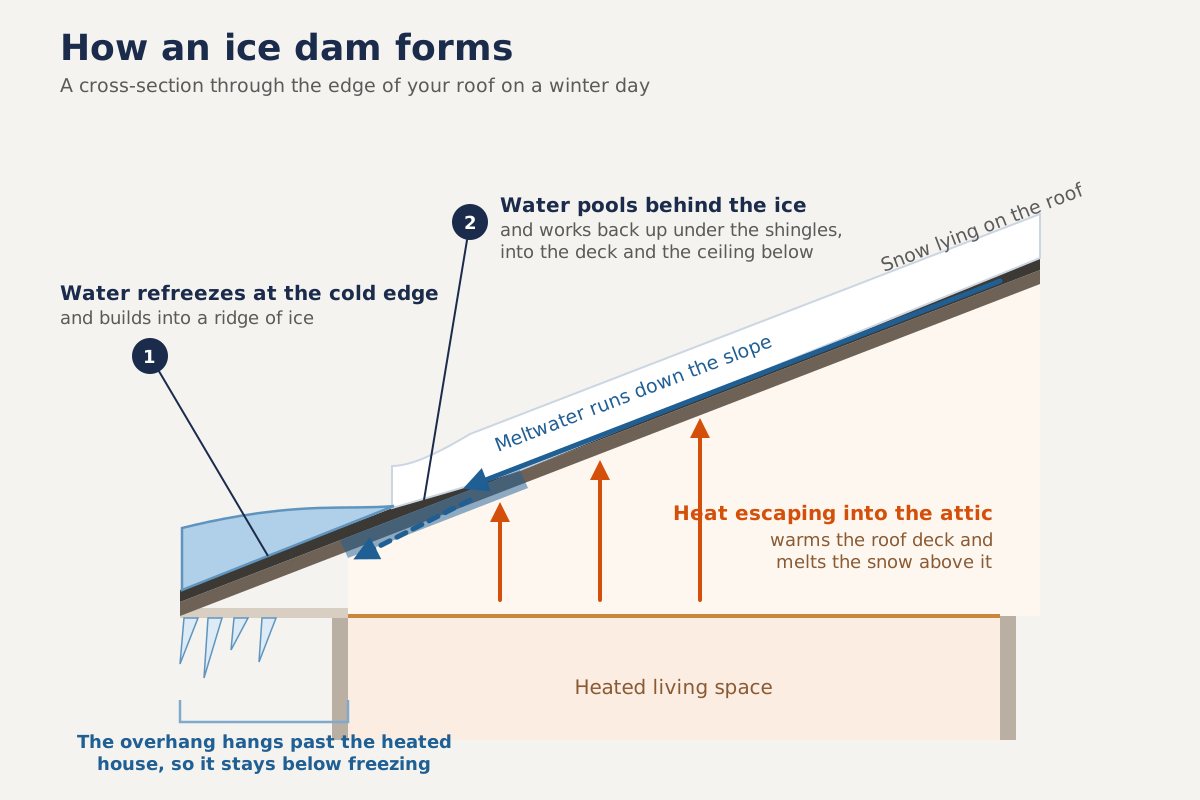
It happens because your roof has two different temperatures at once. Snow on the upper part of the roof melts, because heat from inside the house is warming the deck under it. That meltwater runs down toward the eave, which hangs out past the heated part of the house and stays below freezing. It refreezes there. Do that a few dozen times over a week and you have a wall of ice several inches tall sitting at the roof edge.
The ice isn't the damage. The pond behind it is. Shingles are designed to shed running water, not to hold standing water, so once meltwater backs up and sits, it works sideways into the seams and under the courses. From there it gets into the decking, the insulation, and eventually the ceiling below.
Why Cincinnati Gets Ice Dams Without Much Snow
Homeowners here are often surprised by this, because we're not a snow city. Cincinnati averages 23 inches of snow a year spread across about 22 days, based on the 1991 to 2020 climate normals recorded at Lunken Airport. Buffalo would call that a slow week.
But ice dams aren't about how much snow falls. They're about how many times it melts and refreezes, and that's where our winters are genuinely rough on roofs. Recent years have run between roughly 64 and 95 days below freezing in Cincinnati, and most of those are days that climb above 32 in the afternoon sun and drop back below it after dark. That cycle is the exact machine that builds an ice dam. Cities that stay frozen all winter get fewer dams from a lot more snow.
The Cause Is Inside the House, Not on the Roof
This is the part that surprises people. An ice dam is an attic problem wearing a roofing costume. Your roof deck should be close to the outdoor temperature. When it isn't, heat is getting up there from inside your house, and there are three places to stop it.
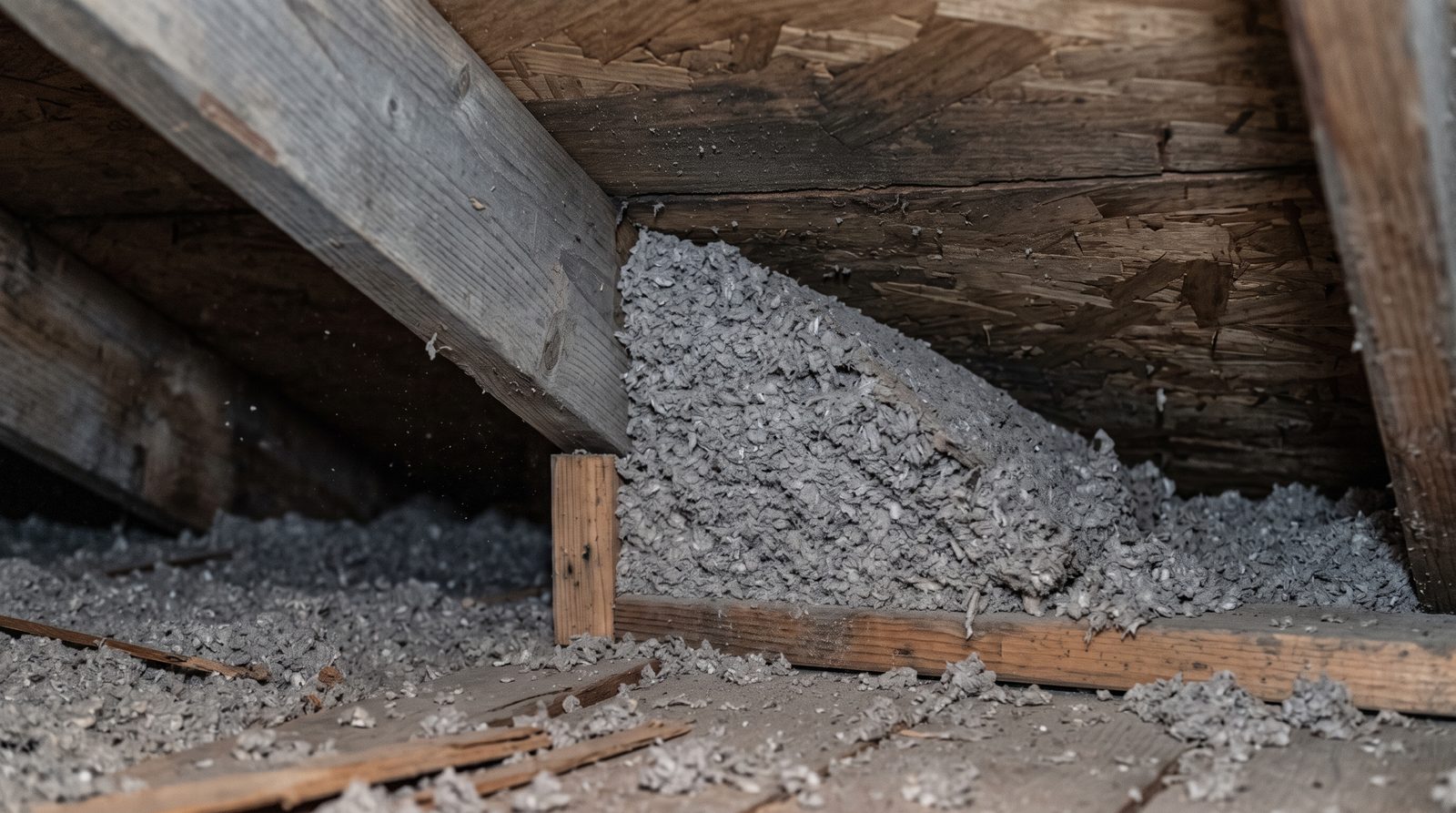
Air sealing comes first and gets skipped most often. Warm indoor air leaks into the attic through recessed light cans, the attic hatch, bath fan housings, plumbing stacks, the chimney chase, and the gaps where interior walls meet the ceiling. A bath fan that vents into the attic instead of out through the roof is one of the most common causes we find, and it delivers warm wet air right where you least want it. Sealing those leaks is usually the cheapest fix on this list and often the most effective.
Insulation comes second. Ohio's residential energy code calls for R-49 in the ceiling for our climate zone, with R-38 accepted in some assemblies where full-height insulation carries over the wall top plate at the eaves. Plenty of houses around Fairfield and Hamilton were built to older standards and are sitting at R-19 or R-30, some of it settled and thinner than it looks. Insulation slows the heat that made it past your air sealing.
Ventilation is third and works with the other two. Cold outside air needs to come in at the soffit and leave at the ridge, which keeps the deck cold and carries moisture out. The failure we see constantly is soffit vents packed shut with blown insulation that somebody pushed too far into the eaves. Intake gets blocked, the airflow stops, and the attic runs warm no matter how much insulation is up there.
What Doesn't Work
Chipping ice off with a hammer or a hatchet is the one to avoid hardest. You will break shingles, and you're standing on a ladder next to a wall of ice to do it.
Throwing rock salt or calcium chloride pucks up on the roof gets recommended in a lot of forum threads. At best it melts a narrow channel through the dam. Meanwhile the runoff corrodes gutters and metal flashing and kills the shrubs underneath. If you use anything, calcium chloride is gentler than rock salt, but it's still a bandage.
Heat cables can help on a problem eave and will keep a channel open through the worst of it. They also run up your electric bill every winter and treat the symptom forever instead of fixing the cause once. We'd rather see that money go into the attic.
A roof rake used from the ground is the one stopgap worth owning. Pulling the snow off the first three or four feet of roof after a heavy fall removes the fuel before it can melt and refreeze. Do it standing on the ground with both feet planted. Nobody should be on a ladder or a roof in January, including us.
Where Roofing and Gutters Fit In
Gutters don't cause ice dams. A clogged one makes them worse, though, because a trough packed with wet leaves freezes solid early and gives the dam something to build on, and the extra weight of that ice is what pulls gutters off the fascia. Clearing the gutters before the first hard freeze is worth doing whether or not you have an ice dam history. Gutter guards keep them clear, though guards don't prevent ice dams either.
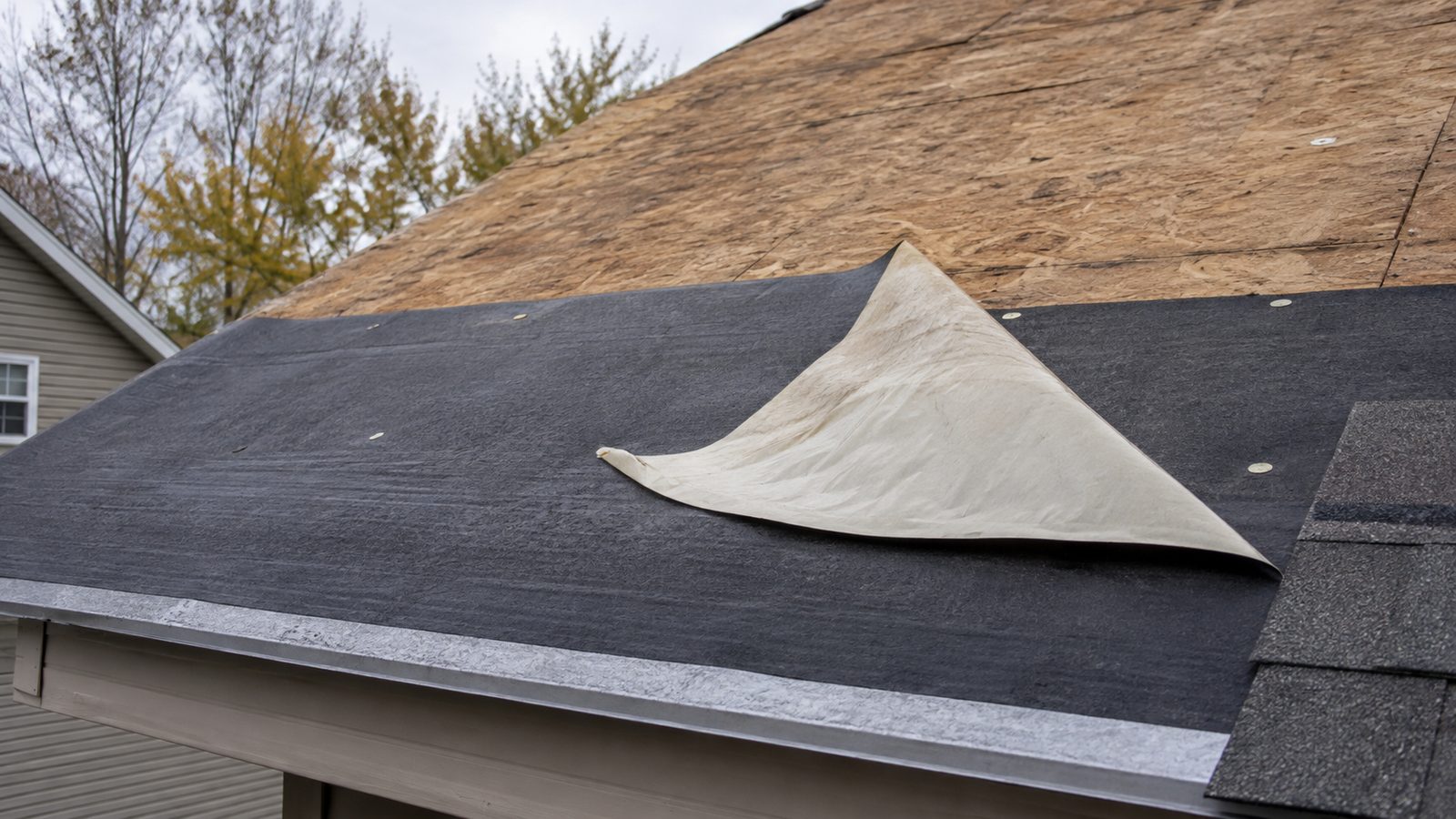
On the roof itself, a self-adhering ice and water membrane along the eaves is standard on a quality replacement. It won't stop a dam from forming, but it seals around fasteners and puts a waterproof layer under the shingles at exactly the spot where water pools. If your roof came with a house built before that was common practice, you may not have it.
And any roof estimate worth reading should look at your attic. When we quote a roof, we check intake and exhaust ventilation, because a new roof over a hot, sealed attic will dam up the same way the old one did. It's also why we've backed our best roofs with a lifetime transferable warranty since we started doing this in 1993. We only get to make that promise if the system underneath is right.
Common Questions About Ice Dams
Are icicles the same thing as an ice dam?
Not quite, but icicles hanging off the gutter line are the visible symptom of the same process. If you get a few small ones after a heavy snow, that's normal. If you get a thick row of them every time it snows, or they're forming behind the gutter rather than off the front edge, you likely have a dam.
How do I get rid of an ice dam that's already there?
From the ground, or with help. Pull snow off the lower roof with a roof rake, and call a professional for steam removal if the dam is large. Steam is the only removal method that won't damage shingles. Do not chip at it and do not get on the roof.
Will a new roof stop ice dams?
By itself, no. A new roof gives you a fresh ice and water membrane at the eaves, which protects you from the leak, but the dam will still form if the attic is warm. Roof replacement is a good moment to fix the ventilation side of it, which is why we look at both together.
Does homeowners insurance cover ice dam damage?
Many policies cover sudden interior water damage from an ice dam but not the cost of preventing it, and coverage varies quite a bit between carriers. Photograph everything before cleanup and call your agent early. Your policy is the only real answer here.
When should I deal with this?
Now, or any time the attic is accessible and the weather is mild. Air sealing and insulation work is far easier in October and November than in a January crawl space over wet insulation, and the fix only helps if it's in place before the first snow that sticks.
Worried About Your Roof This Winter?
If you had icicles, interior stains, or gutters that pulled loose last winter, that's the same problem coming back. We'll take a look at your roof, your gutters, and your attic ventilation, and tell you what's actually driving it before you spend anything.
Call us at (513) 247-2900 or request your free in-home estimate. No pressure, financing starts around $99 a month, and we'll call you back within one business day.
Published September 8, 2026. We review these guides each season and update them when local codes, products or our own crews' experience change what we'd tell you.